I've been finishing up a science fiction novel called Treasure of the Black Hole. It is my attempt to take the 1940s and '50s film noir movie or hard-boiled detective novel about 4,000 years into the future. It has spaceships and aliens and fantastic new technology, but it is written as an old detective novel such as Dashiell Hammett might write. In fact, I need to stick a fork in it and call it "done."
Part of the process of working on the novel (which was a NaNoWriMo project which shows how much more work it takes to go from first draft to finished novel) is I've had several beta reads and the majority of the readers have been women. And I was surprised none of them complained about the sexism in the novel.
But why is there sexism in the novel? Because there was sexism in the old detective novels. Now it's not horrible sexism, mostly confined to the way people talk to each other (e.g., a man saying to a female character: "You're a good man, sister"). And there's strong female characters so it's not completely sexist. But I could see that someone could be offended.
And I'm having a similar issue with my work in progress. It is set in 1881 in the American West (yes, it's a Western but with fantasy elements). But in 1881, racism and sexism were just the ocean everyone swam in. It was so prevalent no one even took notice (except, I'm sure, the victims). So my character can't even think, "Gee, they sure treat those coolies poorly" because in that era, no one would think that except a few very enlightened persons.
For example, a major publishing house rejected my novel Agent of Artifice with a note saying that it was interesting but my hero was a "sleazebag." The only reason I could think they would say that was that the novel is set in the 1950s and he is a womanizer. So, yes, by modern standards, he may be a "sleazebag" but in the '50s he would probably be considered "suave."
In my novel Hammer of Thor, there are three uses of the N-word. Why? Because that's how people talked in the 1930s and '40s.
Sometimes when talking to people about novels they will be upset about the racism and sexism of books written decades or centuries ago. But often, by the standards of the time they were written, they are radically not sexist or racist. For instance, in E.E. Smith's Skylark of Space, the main female character is a very strong woman who speaks her mind. This in a novel written over 100 years ago. Yes, she has to be rescued and all that, but in a period when women were seen and not heard, she is in many ways treated like an equal.
Now, when we're writing novels today we don't have the baggage of writing them before the invention of the traffic signal. But if our novels are set in the past, we have to make them accurate to the period, including sexism, racism, and other evils that we are today trying to get away from. Presenting the realities of the past in a realistic fashion will do more to educate your readers on those realities than pretending they don't exist.
Showing posts with label Hammer of Thor. Show all posts
Monday, June 16, 2014
Monday, May 19, 2014
Book Signing Etiquette
If you're a writer, at some point you might be asked to do a book signing. I've done a few and here's some things I've learned:
Be Prepared: Have three pens (at least one will walk off, the other die), plenty of books, swag (bookmarks, etc.) book stands (book stores don't always provide these). And try to look nice.
You need traffic: Make sure the bookstore sets you up where people will be walking by. If you're in the back corner, people aren't going to seek you out.
Be polite, nice, and friendly: Establish rapport with the customer. Ask them their name, ask them how their day is going. Smile, be friendly. They are much more likely to pick up your book if they think of you as a friend.
Have a "elevator speech" ready for each book: You need a one-sentence description for each book you have there. For instance, for Hammer of Thor I say "Hitler steals the Hammer of Thor, Thor comes back for it. Bad news either way." No one wants to listen to a ten-minute dissertation on the plot points of your novel. Keep it short and simple.
Don't snipe: If it's a multi-author event, don't snipe customers from other authors. Let them finish with the customer before you talk to them.
Ask how to spell the name: These days, especially, names can be spelled weird. So always ask "Who do I make it out to" and then "How do you spell that?" or "Is that spelled D-A-N?" You'll be surprised how many names are spelled very strangely: "No, that's D-H-A-N-N."
Sign and put the date: Putting the date makes it seem more official and special.
Say "Thank you" and mean it: and give them a bookmark (you do have bookmarks, don't you?).
Stay positive: If no one buys your books, or even speaks to you, stay positive, give out swag, and SMILE. No one will want to talk to you if you're a grump.
Be Prepared: Have three pens (at least one will walk off, the other die), plenty of books, swag (bookmarks, etc.) book stands (book stores don't always provide these). And try to look nice.
You need traffic: Make sure the bookstore sets you up where people will be walking by. If you're in the back corner, people aren't going to seek you out.
Be polite, nice, and friendly: Establish rapport with the customer. Ask them their name, ask them how their day is going. Smile, be friendly. They are much more likely to pick up your book if they think of you as a friend.
Have a "elevator speech" ready for each book: You need a one-sentence description for each book you have there. For instance, for Hammer of Thor I say "Hitler steals the Hammer of Thor, Thor comes back for it. Bad news either way." No one wants to listen to a ten-minute dissertation on the plot points of your novel. Keep it short and simple.
Don't snipe: If it's a multi-author event, don't snipe customers from other authors. Let them finish with the customer before you talk to them.
Ask how to spell the name: These days, especially, names can be spelled weird. So always ask "Who do I make it out to" and then "How do you spell that?" or "Is that spelled D-A-N?" You'll be surprised how many names are spelled very strangely: "No, that's D-H-A-N-N."
Sign and put the date: Putting the date makes it seem more official and special.
Say "Thank you" and mean it: and give them a bookmark (you do have bookmarks, don't you?).
Stay positive: If no one buys your books, or even speaks to you, stay positive, give out swag, and SMILE. No one will want to talk to you if you're a grump.
Tuesday, May 6, 2014
Not Paying Attention
All through your childhood and even into adult life, people were always telling you to "pay attention." In school, in our jobs, in our daily tasks were are admonished to "pay attention." And, yes, there are many situation where paying attention is a good thing. I wish more people sitting behind the wheel of the car they are driving would pay more attention.
But sometimes, not paying attention can yield results.
My middle son is home from college for summer break. He turned on the television. I was in another room where I couldn't see the TV, but I could hear. He started watching King of the Hill. Now, I have watched nearly every episode of this show starting it's second season (I had to be talked into watching it). That's 12 seasons and I've seen most of the first season in reruns (and my kids watching the show on Netflix streaming). I liked King of the Hill and was sad when the show's run ended.
And every time I watched King of the Hill, I saw Stephen Root's name in the credits. But I never thought about whose voice he provided. And I like Stephen Root; he's a very good character actor and I've seen him a a lot of television shows and movies.
So my is watching King of the Hill and I'm not paying attention to it except I can hear it. I hear Hank HIll, Boomhauer, Dale, and Bill. And I'm really not listening but for the first time ever, I realize that Stephan Root does the voice of Bill Dauterive because I'm hearing Stephen Root, not seeing Bill Dauterive. Once I disconnected the image from the voice, I could hear the voice of Stephen Root.
And I got thinking about it. I specifically remember when I had the idea that turned into Hammer of Thor. I won't bore you with the details but suffice it to say, I wasn't paying attention to what I was doing but I was thinking about taking my idea of about Adepts into World War II (I'd already written a short story in the Adept universe).
Why do we have our best ideas in the shower? Because most of us shower on automatic pilot so our mind wanders, is free to grab bits from here, bits from there, and through gray matter alchemy, come up with a new idea. We need to give our minds time to . . .wander. We need to spend time not paying attention. We need time not on task. We need to not be on Facebook, Twitter, blogging, writing, reading, or doing our day jobs. We are creative and we are often creative when we aren't trying to be.
So spend some time not paying attention. You might be amazed at what you learn, or what you think up.
But sometimes, not paying attention can yield results.
My middle son is home from college for summer break. He turned on the television. I was in another room where I couldn't see the TV, but I could hear. He started watching King of the Hill. Now, I have watched nearly every episode of this show starting it's second season (I had to be talked into watching it). That's 12 seasons and I've seen most of the first season in reruns (and my kids watching the show on Netflix streaming). I liked King of the Hill and was sad when the show's run ended.
And every time I watched King of the Hill, I saw Stephen Root's name in the credits. But I never thought about whose voice he provided. And I like Stephen Root; he's a very good character actor and I've seen him a a lot of television shows and movies.
So my is watching King of the Hill and I'm not paying attention to it except I can hear it. I hear Hank HIll, Boomhauer, Dale, and Bill. And I'm really not listening but for the first time ever, I realize that Stephan Root does the voice of Bill Dauterive because I'm hearing Stephen Root, not seeing Bill Dauterive. Once I disconnected the image from the voice, I could hear the voice of Stephen Root.
And I got thinking about it. I specifically remember when I had the idea that turned into Hammer of Thor. I won't bore you with the details but suffice it to say, I wasn't paying attention to what I was doing but I was thinking about taking my idea of about Adepts into World War II (I'd already written a short story in the Adept universe).
Why do we have our best ideas in the shower? Because most of us shower on automatic pilot so our mind wanders, is free to grab bits from here, bits from there, and through gray matter alchemy, come up with a new idea. We need to give our minds time to . . .wander. We need to spend time not paying attention. We need time not on task. We need to not be on Facebook, Twitter, blogging, writing, reading, or doing our day jobs. We are creative and we are often creative when we aren't trying to be.
So spend some time not paying attention. You might be amazed at what you learn, or what you think up.
Monday, April 28, 2014
Overcoming Writer's Block
I once had writer's block for two years.
Now, admittedly I was working more than full time, I was busy with other stuff so I wasn't staring at a blinking cursor for two years. But I could not finish Hammer of Thor, my first Adept Series book for two stinking years. I had written almost up to the climax and could not force myself to write more. I had the climax sort of planned out (as much as I plan out any writing in advance) but could not bring myself to write it. For two long years.
Then one day it suddenly occurred to me: my plans sucked. I realized I had plotted out a climax that was pretty anticlimactic. My main character, who had just spent over 100,000 words getting to this place, was going to sit back and watch it happen. I needed to get him into the action. And when I got that figured out, I wrote the climax and denouement in a about a week of spare time (I was still working at my day job).
Now that was a special and I think unusual case of writer's block. My subconscious was telling me "it sucks" so I never wrote it. And it did suck so it was good that I never wrote it.
However, I think a great deal of writer's block is caused by our fear that what we are about to write will suck. We let the perfect be the enemy of the good. I've said over and over on this blog: your first draft will suck, get over it and write the damn thing. Then you can fix it in edits but you can't fix it in edits if you don't write it.
As John Rogers said, "You can’t think yourself out of a writing block; you have to write yourself out of a thinking block." Which is good advise, but sometime I think you can't even write yourself out of it. If I'd gone ahead and written the climax of Hammer of Thor as I'd plotted it out, it would not be as good as it is now.
I have two methods of overcoming writer's block. One is: just keep writing. It might suck, but at least you're writing. And if it does suck, fix it in edits (you do edit, don't you?).
The other method is to stop writing. This is different from writers block. Writer's block is when you don't write when you want to. If you stop writing, you just stop because you don't want to write. What good does that do? It frees the mind from the pressure of producing. It lets your mind wander and think about other stuff other than YOU'RE NOT WRITING. And often this will after a short time, produce an idea that will get me past the writer's block (okay, two years was not a short time).
Last week suffering a bit from writer's block. I am about half-way through a novel and I suddenly had no idea where to take it from where it was at. So I stopped writing and let my thoughts wander and didn't think about it and didn't worry about it. As I was driving on Friday on a 360-mile round trip, I had an idea. This got me thinking. Then I went to my writers' group Friday night. It was a "writing writers' group" where you are expected to produce. I sat there staring at the cursor not getting anywhere. So I backed up a few pages and read what I'd written right up until I got stuck. And I had an idea that built upon the idea I had while driving. If I changed the villain from who it seem to be to a minor character, that would be a great plot twist, would solve so many problems I was having with the plot, and would let me continue. I wrote down some notes on my thoughts so I could do a little thinking about where the plot should go from here (and I need to do a bit of research). But I no longer feel as if I have writers block because I used both methods: I backed off from the writing, and then I was in a situation where I was forced to write.
The same thing happened in God of Strife, the fourth Adept Series novel coming out May 15th. I was about half-way through it when I realized my planned plot for the rest of the novel was weak. So I took a break, and a few days later had the idea that went on to complete the novel.
The more you worry about that fact you're not writing, the more you'll not write. So either write and admit it might be crap that you need to fix later, or stop writing, stop worrying, and let the ideas flow. One or the other method (or a combination of the two) should let you overcome writer's block.
Now, admittedly I was working more than full time, I was busy with other stuff so I wasn't staring at a blinking cursor for two years. But I could not finish Hammer of Thor, my first Adept Series book for two stinking years. I had written almost up to the climax and could not force myself to write more. I had the climax sort of planned out (as much as I plan out any writing in advance) but could not bring myself to write it. For two long years.
Then one day it suddenly occurred to me: my plans sucked. I realized I had plotted out a climax that was pretty anticlimactic. My main character, who had just spent over 100,000 words getting to this place, was going to sit back and watch it happen. I needed to get him into the action. And when I got that figured out, I wrote the climax and denouement in a about a week of spare time (I was still working at my day job).
Now that was a special and I think unusual case of writer's block. My subconscious was telling me "it sucks" so I never wrote it. And it did suck so it was good that I never wrote it.
However, I think a great deal of writer's block is caused by our fear that what we are about to write will suck. We let the perfect be the enemy of the good. I've said over and over on this blog: your first draft will suck, get over it and write the damn thing. Then you can fix it in edits but you can't fix it in edits if you don't write it.
As John Rogers said, "You can’t think yourself out of a writing block; you have to write yourself out of a thinking block." Which is good advise, but sometime I think you can't even write yourself out of it. If I'd gone ahead and written the climax of Hammer of Thor as I'd plotted it out, it would not be as good as it is now.
I have two methods of overcoming writer's block. One is: just keep writing. It might suck, but at least you're writing. And if it does suck, fix it in edits (you do edit, don't you?).
The other method is to stop writing. This is different from writers block. Writer's block is when you don't write when you want to. If you stop writing, you just stop because you don't want to write. What good does that do? It frees the mind from the pressure of producing. It lets your mind wander and think about other stuff other than YOU'RE NOT WRITING. And often this will after a short time, produce an idea that will get me past the writer's block (okay, two years was not a short time).
Last week suffering a bit from writer's block. I am about half-way through a novel and I suddenly had no idea where to take it from where it was at. So I stopped writing and let my thoughts wander and didn't think about it and didn't worry about it. As I was driving on Friday on a 360-mile round trip, I had an idea. This got me thinking. Then I went to my writers' group Friday night. It was a "writing writers' group" where you are expected to produce. I sat there staring at the cursor not getting anywhere. So I backed up a few pages and read what I'd written right up until I got stuck. And I had an idea that built upon the idea I had while driving. If I changed the villain from who it seem to be to a minor character, that would be a great plot twist, would solve so many problems I was having with the plot, and would let me continue. I wrote down some notes on my thoughts so I could do a little thinking about where the plot should go from here (and I need to do a bit of research). But I no longer feel as if I have writers block because I used both methods: I backed off from the writing, and then I was in a situation where I was forced to write.
The same thing happened in God of Strife, the fourth Adept Series novel coming out May 15th. I was about half-way through it when I realized my planned plot for the rest of the novel was weak. So I took a break, and a few days later had the idea that went on to complete the novel.
The more you worry about that fact you're not writing, the more you'll not write. So either write and admit it might be crap that you need to fix later, or stop writing, stop worrying, and let the ideas flow. One or the other method (or a combination of the two) should let you overcome writer's block.
Monday, March 17, 2014
"Adult" Content
Captain Blood was apparently a big hit when it was released despite staring the then-unknown Flynn. It was also nominated for a best-picture Oscar. But by today's standards it is very tame.
And it got me thinking about how much "adult content" entertainment needs to have to be entertaining. Captain Blood is entertaining with almost zero adult content. But the movie Rush was also entertaining but had nudity, bad language, and violence (in the form of car crashes and fist fighting).
Back when Captain Blood was made, entertainers had no choice. The U.S. used an obscenity standard that was based on English common law which required (according to Wikipedia) "any material that tended to 'deprave and corrupt those whose minds are open to such immoral influences'" and that was interpreted to mean the most sensitive individuals in a society which meant children. Which meant that all entertainment had to be okay for children. A series of Supreme Court decisions, ending with Miller vs. California in 1973 redefined obscenity (which did not enjoy First Amendment protections) as work that "applies to prurient interest" and lacks "serious literary, artistic, political, or scientific value." That last part has been a pretty big loophole and a lot squeezes through it judging by the dregs of our culture. So your novel can have the raunchiest sex scenes and the most graphic violence and assuming it has literary or artistic value, there's no problem. So pretty much the law no longer regulates what "adult content" entertainment can have.
So this is where the word "gratuitous" comes in. What if in Captain Blood there was a sex scene, with nudity, with the prostitute. What if during the sword fights there was blood gushing everywhere. Would that be gratuitous? It obviously wasn't needed since it's a fine film without it. But the violence of Saving Private Ryan was there for a reason and the movie needed those graphic, bloody scenes to make its point about war and the "Greatest Generation."
My opinion on "adult content" is probably pretty typical: if it's needed, use it. In my science fiction novel Rock Killer the "F-word" is used three times. Why? Because I felt in those bits of dialog only the F-word would suffice to convey the meaning I wanted to convey.
In my Adept Series novels I have tried to keep the "adult" content" to a minimum. Swear words are mild, sex is off-screen (so to say), and while the violence gets bloody it's not belabored. But there are things some might find offensive. For instance, in the first Adept Series novel, Hammer of Thor, there's a scene where a doorman at a speakeasy says: "No niggers, chinks, or Irish." (I had a conundrum about this at a public reading and bowdlerized myself.) In fact, the "n-word" appears three times in Hammer of Thor and I just used it in my unnamed work in progress (which is set in 1881 when racism was ubiquitous).
I'm not one that gets easily offended but there are people who are. Should we write for them? No. We should write for our intended audience. "Adult content" should never be gratuitous but should be used when it's needed for the story and the message. Sex, violence, and bad language have their place. And some readers want gratuitous sex, violence, and bad language. As with all writing, remember your audience and you probably won't go wrong.
Tuesday, January 14, 2014
Stick a Fork in It
One problem I think a lot of novice writers have is constant and never-ending revisions. They want to tweak and tweak and make their manuscript perfect.
Let me clue you in, it's never going to be perfect. At some point it has to be "good enough" and you stick a fork in it, and call it "done." Will it be perfect? Nope. I can pick up Hammer of Thor (my first published novel) and find things where I think "I could have written that better." But if the book were still on my hard drive being revised again and again, no one would be reading it. If it weren't "good enough" I wouldn't have mostly positive reviews.
Yes, you need to edit it. Your first draft will be pretty bad. A while back I wrote this post on editing you might find helpful.
But when is it good enough? That is very subjective. I think my freelance writing has helped me with this because I am given discrete, hard deadlines. I make the story as good as I can in the time allowed (although I also often submit early because I think it's "good enough"). I would say when you can read it and like it all it is good enough. When your beta readers like it, it is good enough. Of course, if you can get an agent or publisher to like it, it is good enough but that's hard to do unless it's already good enough.
So here's some tips:
- Edit/revise until you like it
- Have others read it, see if they like it. Make revisions as necessary
- Let it sit for a month or more, then go through it again.
- If you still like it, it's probably good enough.
Now you may be a no-talent hack and it'll never be good enough. But I'm pretty sure you aren't. You're a good writer and you write good stuff. It will be, at some point, "good enough." And that's another key: have confidence. Don't be arrogant, of course, take constructive feedback from beta readers and others. But be confident in your ability to write.
Again, this is all very subjective, but writing is subjective. If it was math, anyone could do it (yes, I know there's lots of people who can't do math). Feedback is important. Confidence is important. Being your own best editor is important.
But at some point you have to stick of fork in it and call it "done."
And then your publisher will wonder why the manuscript has holes in it.
Saturday, January 4, 2014
Are All My Main Characters "Mary Sue"?
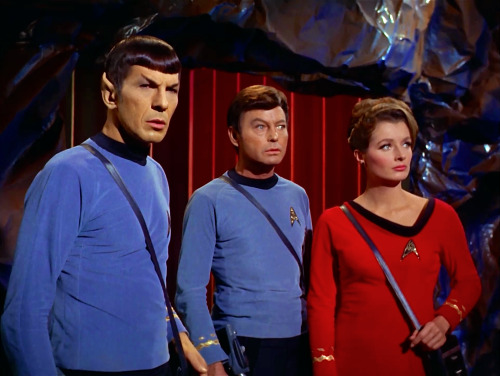
There is in fiction writing a concept call the "Mary Sue" (some call the male versions "Marty Stu"). A "Mary Sue" is a character who represents the writer themselves. They are, thus, often wonderful amazing characters that achieve they hopes and dreams of the writer. Wikipedia notes the term comes from a satire of unrealistic "Star Trek" fan fiction:
But here's the problem. Who does the writer know best? Himself or herself. So where can the writer best draw character distinctions? From himself or herself. For instance, my main character in Hammer of Thor, Francis Kader, has a couple of flaws I have myself. Michael Vaughan of Agent of Artifice is pretty much based on how I would probably act if I were an adept (the people with magical powers in my Adept Series novels). And Peter Branton of Book of Death and the forthcoming Gods of Strife has more than a few of my personality quirks. But does this make them Marty Stus? I don't think so because they have flaws (mostly mine) and are not perfect. Is there a little self-insertion going on? Yeah, but I don't think that makes them bad characters.
(Speaking of self-insertion, I have read two fiction novels which mention the author: Brothers No More by William F. Buckley mentions Buckley's run for mayor of New York City and in Number of the Beast by Robert A. Heinlein a character says of Heinlein's Stranger in a Strange Land something like, "what some writers won't do for money." But that's a different kind of self-insertion and in both cases the authors used it as self-denigrating jokes.)
In my novel Rock Killer, I gave the main character, Alexander Chun, horrible space sickness (and he works in space). I did this because I suspect I would have horrible space sickness (I get motion sick very easily) and it was an easy flaw to give him (yes, he has other flaws). So again, I drew upon myself.
Of course, for writers there are countless places to draw characters from. And you should never base a character on a specific person but use an amalgamation of people and their characteristics. But don't be afraid to give a character a characteristic you have in fear of having a Mary Sue, especially if it's a flaw. And, whatever you do, don't have an idealized character who is flawless in every way. Even Superman had Kryptonite and Lois Lane.
The story starred Lieutenant Mary Sue ("the youngest Lieutenant in the fleet — only fifteen and a half years old")Also according to the same article, it has been speculated that Wesley Crusher on "Star Trek: The Next Generation" was a "self-insertion" by Gene Roddenberry and thus a Marty Stu. (I held this opinion long before I learned the term "Mary Sue" and in fact, since about half-way through the first season of ST:TNG.)
But here's the problem. Who does the writer know best? Himself or herself. So where can the writer best draw character distinctions? From himself or herself. For instance, my main character in Hammer of Thor, Francis Kader, has a couple of flaws I have myself. Michael Vaughan of Agent of Artifice is pretty much based on how I would probably act if I were an adept (the people with magical powers in my Adept Series novels). And Peter Branton of Book of Death and the forthcoming Gods of Strife has more than a few of my personality quirks. But does this make them Marty Stus? I don't think so because they have flaws (mostly mine) and are not perfect. Is there a little self-insertion going on? Yeah, but I don't think that makes them bad characters.
(Speaking of self-insertion, I have read two fiction novels which mention the author: Brothers No More by William F. Buckley mentions Buckley's run for mayor of New York City and in Number of the Beast by Robert A. Heinlein a character says of Heinlein's Stranger in a Strange Land something like, "what some writers won't do for money." But that's a different kind of self-insertion and in both cases the authors used it as self-denigrating jokes.)
In my novel Rock Killer, I gave the main character, Alexander Chun, horrible space sickness (and he works in space). I did this because I suspect I would have horrible space sickness (I get motion sick very easily) and it was an easy flaw to give him (yes, he has other flaws). So again, I drew upon myself.
Of course, for writers there are countless places to draw characters from. And you should never base a character on a specific person but use an amalgamation of people and their characteristics. But don't be afraid to give a character a characteristic you have in fear of having a Mary Sue, especially if it's a flaw. And, whatever you do, don't have an idealized character who is flawless in every way. Even Superman had Kryptonite and Lois Lane.
Wednesday, June 19, 2013
Research (Again)
I found myself thinking today about research for my writing. Don't ask me why, my pshrink says I'm mildly ADD (or as I call it "ADOS": Attention Deficit--Ooooh, Shiny). So here's what I've been thinking:
For Hammer of Thor I read all or parts of five books (2 fiction, 3 non-fiction), lots of internet research (planes, weapons, uniforms), plus because my father is a war movie nut I've probably seen every movie made about WWII. And I watched a documentary about the Korean War. (I also knew a lot about Korea from my time in the Army even though I was never stationed there.)
For Agent of Artifice I read all or part of four books (all non-fiction), plus I spent a day in the Chicago library reading newspapers from that era (specifically, when my character was in Chicago). I watched three movies (fiction) on the Cuban revolution (none of them very good). I travelled to Seattle to visit the Space Needle and I even traveled to Key West to see what it looked like (I was in Miami on business). Plus lots of internet research (the CIA, the Bay of Pigs invasion, weapons, Cuba before the revolution, mobsters in Chicago). And on a trip to San Francisco I walked by the Huntington Hotel (which forced me to re-write a few things in Hammer of Thor and re-write a whole scene in Agent of Artifice but it ended up being a great scene).
For Book of Death I read all or parts of two non-fiction books, communicated through email with a Romanian who immigrated to America (she wrote one of the books I read), and lots of internet research (Romania, Vlad the Impaler, and more). I also watched two documentaries on San Francisco in the late '60s.
However, for Rock Killer I did very little research. But it was science fiction so I had to do no historical research like on the Adept Series books (the three listed above). I did a little internet research on space life-support systems but most everything else in the book either I knew from college courses or it was science fiction (I tried to make Rock Killer as scientifically accurate as I could). I found someone who spoke Arabic and they gave me some background on culture and politics of the Middle East.
Then comes my latest almost-finished book, the last book in the Adept Series (unless I write another) called Gods of Strife. I read zero books and everything was done on the internet. I watched no movies or documentaries (unless Argo counts but I didn't learn anything from it). I did travel to Seattle to walk through the Concorde at the Museum of Flight.
And here's the thing: Rock Killer, my least researched novel, is my best-reviewed book (sometimes I think the Adept Series is too unique for a lot of people). So the amount of research I put into a book does not necessarily correlate at all to how good people think the book is.
Gods of Strife I think is a really good book (but I think all my books are really good) and it has almost no research. I think I spent more time researching a Lamborghini Countach than anything else. So how much research I put into a book doesn't seem to make it better or worse.
My thoughts on research are that you can't do too much unless you lived through what you're writing about. But what you can (and shouldn't do) is show off how much research you did by putting in some cool thing you learned that isn't germane to your narrative.
For Hammer of Thor I read all or parts of five books (2 fiction, 3 non-fiction), lots of internet research (planes, weapons, uniforms), plus because my father is a war movie nut I've probably seen every movie made about WWII. And I watched a documentary about the Korean War. (I also knew a lot about Korea from my time in the Army even though I was never stationed there.)
For Agent of Artifice I read all or part of four books (all non-fiction), plus I spent a day in the Chicago library reading newspapers from that era (specifically, when my character was in Chicago). I watched three movies (fiction) on the Cuban revolution (none of them very good). I travelled to Seattle to visit the Space Needle and I even traveled to Key West to see what it looked like (I was in Miami on business). Plus lots of internet research (the CIA, the Bay of Pigs invasion, weapons, Cuba before the revolution, mobsters in Chicago). And on a trip to San Francisco I walked by the Huntington Hotel (which forced me to re-write a few things in Hammer of Thor and re-write a whole scene in Agent of Artifice but it ended up being a great scene).
For Book of Death I read all or parts of two non-fiction books, communicated through email with a Romanian who immigrated to America (she wrote one of the books I read), and lots of internet research (Romania, Vlad the Impaler, and more). I also watched two documentaries on San Francisco in the late '60s.
However, for Rock Killer I did very little research. But it was science fiction so I had to do no historical research like on the Adept Series books (the three listed above). I did a little internet research on space life-support systems but most everything else in the book either I knew from college courses or it was science fiction (I tried to make Rock Killer as scientifically accurate as I could). I found someone who spoke Arabic and they gave me some background on culture and politics of the Middle East.
Then comes my latest almost-finished book, the last book in the Adept Series (unless I write another) called Gods of Strife. I read zero books and everything was done on the internet. I watched no movies or documentaries (unless Argo counts but I didn't learn anything from it). I did travel to Seattle to walk through the Concorde at the Museum of Flight.
And here's the thing: Rock Killer, my least researched novel, is my best-reviewed book (sometimes I think the Adept Series is too unique for a lot of people). So the amount of research I put into a book does not necessarily correlate at all to how good people think the book is.
Gods of Strife I think is a really good book (but I think all my books are really good) and it has almost no research. I think I spent more time researching a Lamborghini Countach than anything else. So how much research I put into a book doesn't seem to make it better or worse.
My thoughts on research are that you can't do too much unless you lived through what you're writing about. But what you can (and shouldn't do) is show off how much research you did by putting in some cool thing you learned that isn't germane to your narrative.
Tuesday, June 4, 2013
Beta Number Two
Over the weekend I got back my second "beta" where someone read my work in progress (WIP) and made suggestions. This person (another published author) had a very good comment about my violating a character's character. And she was right. So this involved some re-writing and revising and now the novel is an amazing 88,000 words long. That makes it the third longest novel I've written after Hammer of Thor (about 129,000 words) and an as-of-yet unpublished novel (100,000 words). And to be honest, Thor was two novels I mashed together.
She pointed out that something that made me realize I had an inconsistency in this novel with something that happened in Hammer of Thor. So I had to fix that, too.
She also pointed out I tend to use passive voice more than is recommended for fiction writing but that it seems to be part of my distinct voice" (as she called it) and she usually didn't notice unless it was glaring.
So I'm finding this beta process useful. She also found a couple of errors, said some encouraging things, and said overall she really liked it. One more beta to go. He told me Friday I need to nag him every few days. I already did once so I'll wait until tomorrow to do it again.
She pointed out that something that made me realize I had an inconsistency in this novel with something that happened in Hammer of Thor. So I had to fix that, too.
She also pointed out I tend to use passive voice more than is recommended for fiction writing but that it seems to be part of my distinct voice" (as she called it) and she usually didn't notice unless it was glaring.
So I'm finding this beta process useful. She also found a couple of errors, said some encouraging things, and said overall she really liked it. One more beta to go. He told me Friday I need to nag him every few days. I already did once so I'll wait until tomorrow to do it again.
Friday, May 31, 2013
Movie Reviews: Jack Reacher and Gangster Squad
Last night I watched Gangster Squad on Blu-ray. On Tuesday I watched Jack Reacher (it's a two-movie week per my method of keeping Netflix from "throttling" me).
Both movies were crime dramas but they were vastly different films.
Jack Reacher is set in modern times. It has twists and turns and is well made and well written (I understand it's based on a book). It stars Tom Cruise who also produced. The biggest problem I had was Tom Cruise being an amazing hand-to-hand fighter. He's a small guy and doesn't come off as being that tough. He suits his Mission Impossible role better (smart guy, tough enough when needed). But in this film his character fights off five guys at one point. I was starting to get a little unhappy with the plot as it was starting to look like "evil corporation" but instead it was evil guy doing his bad stuff through a corporation. Yes, there's a difference. And Reacher's backstory as explained in the movie is a bit incredible. On Netflix I gave it three stars. I would have given it 3.5 but there's no option for that. I understand there's more books so there may be more movies.
(And I like Tom Cruise and have ever since Risky Business. I don't know why people give him so much crap and say he's gay. I don't care if he's gay but I doubt he got all those beautiful women to marry him being gay.)
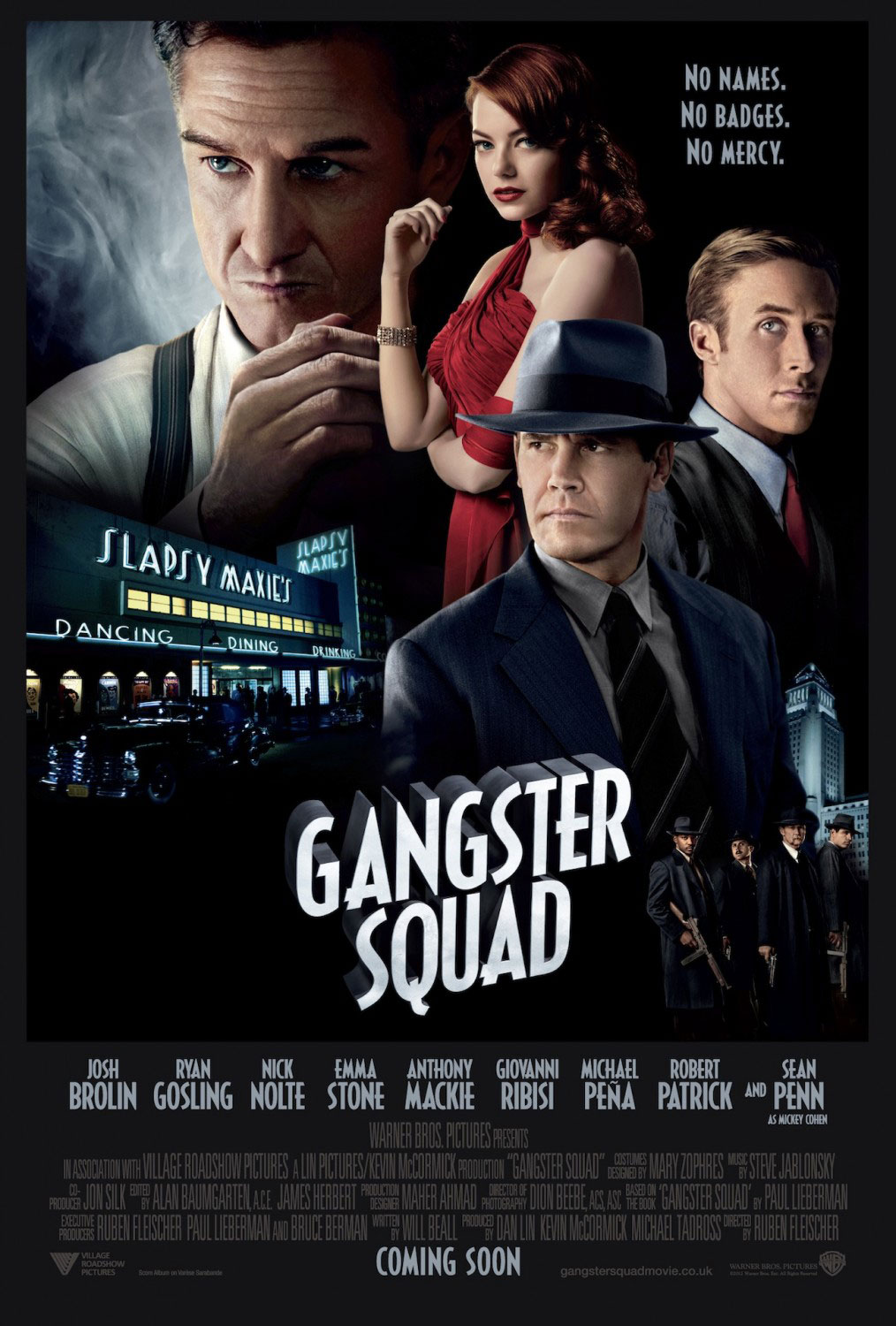
Despite its low Rotten Tomatoes score, I also got Gangster Squad. Mostly because it looked fun (and I like Emma Stone). And I love 1940s women's fashions and Stone looked amazing in this movie. But the focus of the movie was action. It's set in Los Angeles in 1949 when the chief of police had a cop set up a squad to go after a mobster. Lots of gunfights, actions, explosions, a bit of gratuitous blood (it was rated R, Jack Reacher, the better movie, was rated PG-13).
The problem with Gangster Squad was some stilted dialogue, implausible events, and almost no character development. It was like eye candy (or watching Emma Stone in that red dress), fun but not ultimately satisfying. I gave it three starts on Netflix but I would have given it 2.5 but that's not an option.
At the beginning of Gangster Squad it says "Inspired by true events" and then according to the "goofs" section of the Internet Movie Database page on the movie, it pretty much got nothing right except the names and dates. By that standard I could say Hammer of Thor is "inspired by true events" because World War II actually happened.
And I decided Ryan Gosling could play Michael Vaughan, the hero of Agent of Artifice, in the movie version. If there ever is a movie version.
Both movies were crime dramas but they were vastly different films.
Jack Reacher is set in modern times. It has twists and turns and is well made and well written (I understand it's based on a book). It stars Tom Cruise who also produced. The biggest problem I had was Tom Cruise being an amazing hand-to-hand fighter. He's a small guy and doesn't come off as being that tough. He suits his Mission Impossible role better (smart guy, tough enough when needed). But in this film his character fights off five guys at one point. I was starting to get a little unhappy with the plot as it was starting to look like "evil corporation" but instead it was evil guy doing his bad stuff through a corporation. Yes, there's a difference. And Reacher's backstory as explained in the movie is a bit incredible. On Netflix I gave it three stars. I would have given it 3.5 but there's no option for that. I understand there's more books so there may be more movies.
(And I like Tom Cruise and have ever since Risky Business. I don't know why people give him so much crap and say he's gay. I don't care if he's gay but I doubt he got all those beautiful women to marry him being gay.)
Despite its low Rotten Tomatoes score, I also got Gangster Squad. Mostly because it looked fun (and I like Emma Stone). And I love 1940s women's fashions and Stone looked amazing in this movie. But the focus of the movie was action. It's set in Los Angeles in 1949 when the chief of police had a cop set up a squad to go after a mobster. Lots of gunfights, actions, explosions, a bit of gratuitous blood (it was rated R, Jack Reacher, the better movie, was rated PG-13).
The problem with Gangster Squad was some stilted dialogue, implausible events, and almost no character development. It was like eye candy (or watching Emma Stone in that red dress), fun but not ultimately satisfying. I gave it three starts on Netflix but I would have given it 2.5 but that's not an option.
At the beginning of Gangster Squad it says "Inspired by true events" and then according to the "goofs" section of the Internet Movie Database page on the movie, it pretty much got nothing right except the names and dates. By that standard I could say Hammer of Thor is "inspired by true events" because World War II actually happened.
And I decided Ryan Gosling could play Michael Vaughan, the hero of Agent of Artifice, in the movie version. If there ever is a movie version.
Thursday, April 11, 2013
Public Reading
I and four other local authors did a reading yesterday in a public library. It was interesting to hear every one's writing style. I read from Chapter One of Hammer of Thor.
The problem was that due to the library's small size, we did it in the children's section and there were children around. So I bowdlerized my work a bit. I took:
And changed it to:
(The hero's love interest is Korean. The whole reason of having that line was to show the prejudices people had to deal with in the not-too-recent past.)
Which brings us to an interesting point. My novel was set in 1932 and people spoke differently back then. While the "n-word" is now the worst thing you can say, when I was a kid 40 years ago, we thought nothing of it. And I wasn't raised in the South (well, Idaho, but that's not quite the same thing). When I was a kid, "Negro" was the polite word for what is now supposed to be "African-American" (and between the two we went through "Black"). People from the eastern side of Asia were called "Oriental" and now it's rude not to use "Asian."
So at the risk of offending people, I used "Negro" (and some characters said the N-word) and Oriental in 1932. But I wasn't going to have my characters talk as if they lived in 2013 when they existed 81 years ago. And if someone is offended, I'm sorry.
The problem was that due to the library's small size, we did it in the children's section and there were children around. So I bowdlerized my work a bit. I took:
However, the guard at the door took one look at her and said, "No niggers, chinks, or Irish."
And changed it to:
However, the guard at the door took one look at her and said, "No Orientals."
(The hero's love interest is Korean. The whole reason of having that line was to show the prejudices people had to deal with in the not-too-recent past.)
Which brings us to an interesting point. My novel was set in 1932 and people spoke differently back then. While the "n-word" is now the worst thing you can say, when I was a kid 40 years ago, we thought nothing of it. And I wasn't raised in the South (well, Idaho, but that's not quite the same thing). When I was a kid, "Negro" was the polite word for what is now supposed to be "African-American" (and between the two we went through "Black"). People from the eastern side of Asia were called "Oriental" and now it's rude not to use "Asian."
So at the risk of offending people, I used "Negro" (and some characters said the N-word) and Oriental in 1932. But I wasn't going to have my characters talk as if they lived in 2013 when they existed 81 years ago. And if someone is offended, I'm sorry.
Monday, February 25, 2013
Doing Research
When I write my Adept Series novels (such as Hammer of Thor) that are set in the past, I do a lot of research in order to get them as historically accurate as possible (and then I make Pearl Harbor Day December 6th just to tell the reader "this is not our world"). I enjoy the research, usually. I love learning new things. I encourage all writers to do as much research as they can. Unless you lived it, you can't do too much research.
But . . . what you can do is show off how much research you did by throwing in extraneous details not germane to the story.
Movie makers will make this mistake with sets or special effects. They want to show off how much work they put into their elaborate sets or special effects they will spend a lot of time (or so it seems) showing them off (see Star Trek: The Motion Picture). This has become less of a problem with CGI since they are easier and cheaper to do than traditional miniatures/matte SFX.
To give you an example in my own writing. There's a scene in Hammer of Thor (this scene, in fact) where I did many hours of research. It is set in 1943 San Francisco on a foggy day. I wanted the fog to be at a level where buildings would peek out of the top and being the writer, I could set the fog at pretty much any elevation I choose (maybe I should have researched how high and low fog gets in San Francisco, but I didn't). But, what buildings would poke out of the fog, which ones would be just under it, and what else would protrude into clear sky?
This turned out to be a multiple problem problem. One: what buildings existed in 1943 San Francisco? Two: how tall were those buildings? And three: what was the elevation of the ground they were built one? Because their absolute height would depend on Two and Three. And San Francisco is a hilly city so the base of buildings could be anything from sea level to 407 feet (the elevation of Castro Hill).
The internet to the rescue! (When I think about how hard this would have been before the internet, I shudder.) There was a website called skyscrapers.com. They listed every tall building in most larger cities around the world. They listed when they were built, their address, and how high they were (and other stuff I didn't care about). Through that I was able to make a list of tall buildings that existed in San Francisco in 1943 and their height (since then, the website has put all that info behind a pay wall). Microsoft used to have a map online (still might) that was a terrain map. Using one online map to figure out the address, I would then use the terrain map to estimate the altitude of the base of the building. I set up an Excel spreadsheet (I still have it) and I listed each building, the height above ground, the elevation of its base, and added those together to get its absolute height over sea level. I then subtracted the height of the fog (450 feet) to get how far above or below the fog the building was. And I used that information in writing the scene.
Go listen to (or read) that scene. Is it obvious I did that much work? I hope not. But I wanted that scene accurate as possible. And that's what, as a writer, you should do. Make sure you do enough research to be accurate, but don't show off how much you did.
Except maybe on your blog.
But . . . what you can do is show off how much research you did by throwing in extraneous details not germane to the story.
Movie makers will make this mistake with sets or special effects. They want to show off how much work they put into their elaborate sets or special effects they will spend a lot of time (or so it seems) showing them off (see Star Trek: The Motion Picture). This has become less of a problem with CGI since they are easier and cheaper to do than traditional miniatures/matte SFX.
To give you an example in my own writing. There's a scene in Hammer of Thor (this scene, in fact) where I did many hours of research. It is set in 1943 San Francisco on a foggy day. I wanted the fog to be at a level where buildings would peek out of the top and being the writer, I could set the fog at pretty much any elevation I choose (maybe I should have researched how high and low fog gets in San Francisco, but I didn't). But, what buildings would poke out of the fog, which ones would be just under it, and what else would protrude into clear sky?
This turned out to be a multiple problem problem. One: what buildings existed in 1943 San Francisco? Two: how tall were those buildings? And three: what was the elevation of the ground they were built one? Because their absolute height would depend on Two and Three. And San Francisco is a hilly city so the base of buildings could be anything from sea level to 407 feet (the elevation of Castro Hill).
The internet to the rescue! (When I think about how hard this would have been before the internet, I shudder.) There was a website called skyscrapers.com. They listed every tall building in most larger cities around the world. They listed when they were built, their address, and how high they were (and other stuff I didn't care about). Through that I was able to make a list of tall buildings that existed in San Francisco in 1943 and their height (since then, the website has put all that info behind a pay wall). Microsoft used to have a map online (still might) that was a terrain map. Using one online map to figure out the address, I would then use the terrain map to estimate the altitude of the base of the building. I set up an Excel spreadsheet (I still have it) and I listed each building, the height above ground, the elevation of its base, and added those together to get its absolute height over sea level. I then subtracted the height of the fog (450 feet) to get how far above or below the fog the building was. And I used that information in writing the scene.
Go listen to (or read) that scene. Is it obvious I did that much work? I hope not. But I wanted that scene accurate as possible. And that's what, as a writer, you should do. Make sure you do enough research to be accurate, but don't show off how much you did.
Except maybe on your blog.
Wednesday, February 20, 2013
Monday, February 11, 2013
RadCon Schedule
This weekend is RadCon science fiction and fantasy convention in Tri-Cities, Washington. It will be at the Red Lion Inn by the Pasco Airport (across the street from the community college). I am a "visiting professional" and will be doing a reading and appearing on three panels, including one about asteroid mining (viz, Rock Killer).
Here is my schedule of events:
Friday the 15th, 4:30 P.M. to 5:00 P.M., Small Press room: I'll be reading from my urban fantasy, Adept Series novels Hammer of Thor and Book of Death. I'll also be handing out swag.
Saturday the 16th: 1:00 P.M. to 2:00 P.M., Small Press room: "Working with a Small Press Publisher" panel.
Also Saturday: 2:00 P.M. to 3:00 P.M., Sage room: "What can we do with an asteroid?" panel.
And finally Saturday: 4:00 P.M. to 5:00 P.M., Room 2205, "Mixing Genres" panel.
I hope to see you there. Come up and say "Hi!"
UPDATE: I'll have swag and books!
Here is my schedule of events:
Friday the 15th, 4:30 P.M. to 5:00 P.M., Small Press room: I'll be reading from my urban fantasy, Adept Series novels Hammer of Thor and Book of Death. I'll also be handing out swag.Saturday the 16th: 1:00 P.M. to 2:00 P.M., Small Press room: "Working with a Small Press Publisher" panel.
Also Saturday: 2:00 P.M. to 3:00 P.M., Sage room: "What can we do with an asteroid?" panel.
And finally Saturday: 4:00 P.M. to 5:00 P.M., Room 2205, "Mixing Genres" panel.
I hope to see you there. Come up and say "Hi!"
UPDATE: I'll have swag and books!
Friday, January 4, 2013
Hammer of Thor Free!
This weekend (January 5 - 6) Hammer of Thor will be free on the Kindle or your Kindle app on your favorite device. The first novel in the Adepts Series trilogy, tells what happens when Hitler steals the Hammer of Thor and Thor comes back for it (hint: bad news, either way).
This is a limited time offer so get your copy today. Hammer of Thor is an epic adventure spanning continents, cultures, languages, and decades.
Subscribe to:
Posts (Atom)